 Machine Octopus
Quality used machinery from trusted brokers
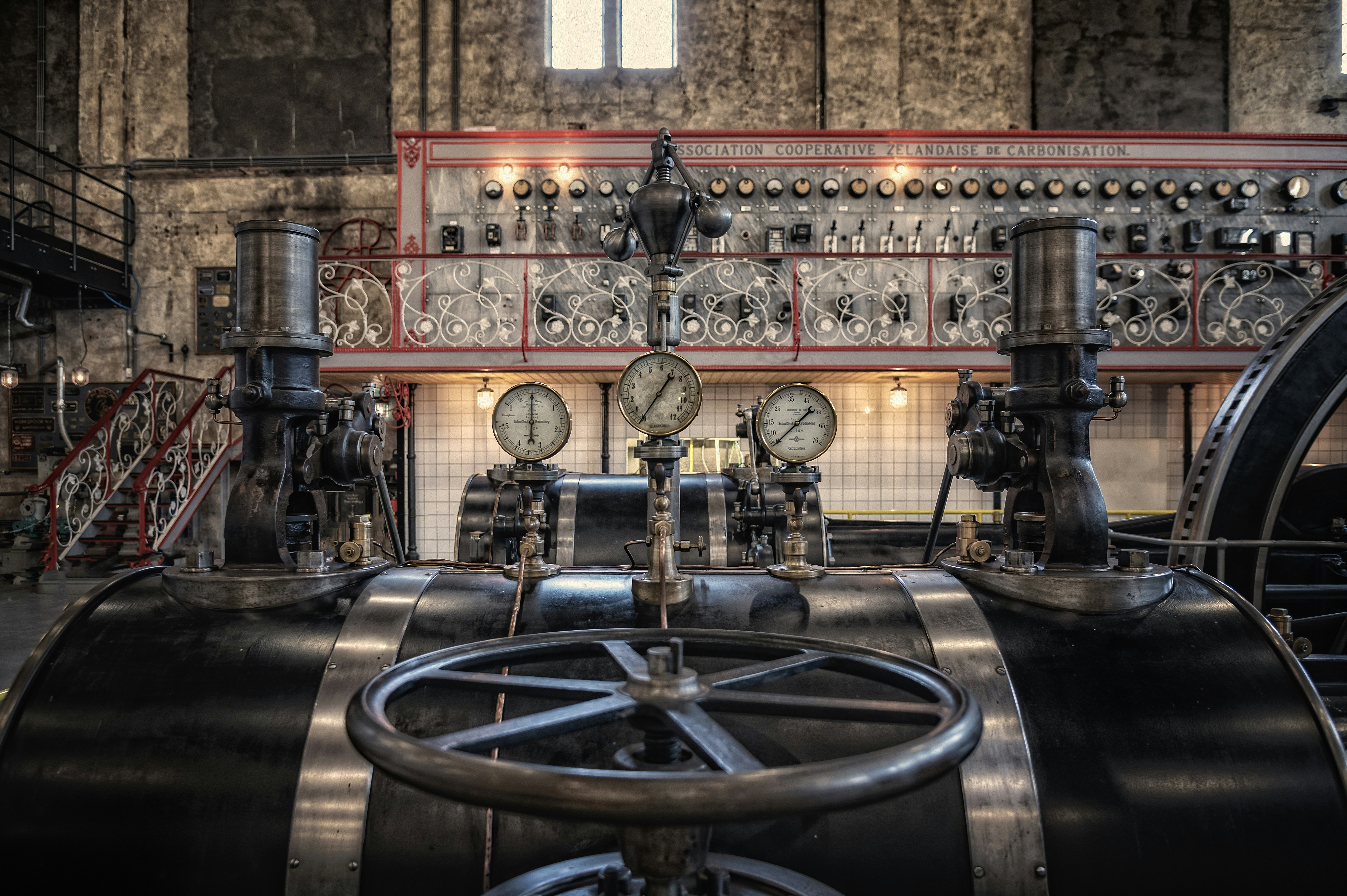
The oldest machines on Machine Octopus, and what they were built to make
Fifteen machines built between 1940 and 1959 are still listed and still working. Here is what each one actually does.
A 1940 drill press, a 1943 lathe cast in Hannover, and a turret lathe from East Germany. Fifteen machines built before 1960 are still on the market, and each one was built to do a specific job that somebody still pays for.
The oldest machine currently listed on our website was built in 1940 - a Lindner LB 14 upright drill.
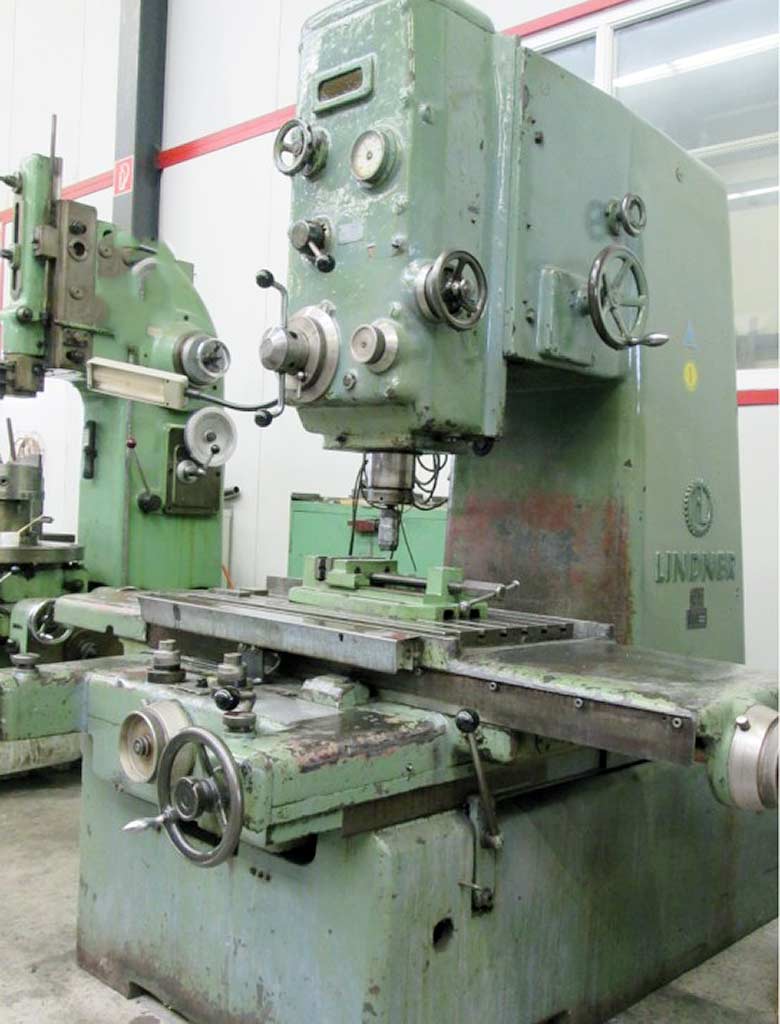
It weighs a mighty 2,500kg and it does exactly one thing: it puts holes in metal. The table measures 800mm by 400mm, the head travels 600mm across and 400mm in, and somewhere in the last eighty-six years somebody fitted it with a Heidenhain digital readout so the operator can see the position on a screen instead of counting handwheel turns like in the olden days. That readout is the only part of the machine that belongs to the modern era.
Drilling is the work that never goes away. Every bracket, every machine frame, every steel plate that has to bolt to another steel plate needs holes put in it to a marked position, and that requirement has not changed since 1940. The Alzmetall AB 4 SJ from 1951 does the same job at a similar scale, rated to 35mm diameter through steel and 45mm through cast iron, and machines like it sat in effectively every metalworking shop in West Germany through the reconstruction years, drilling the components for the factories that were being rebuilt around them.
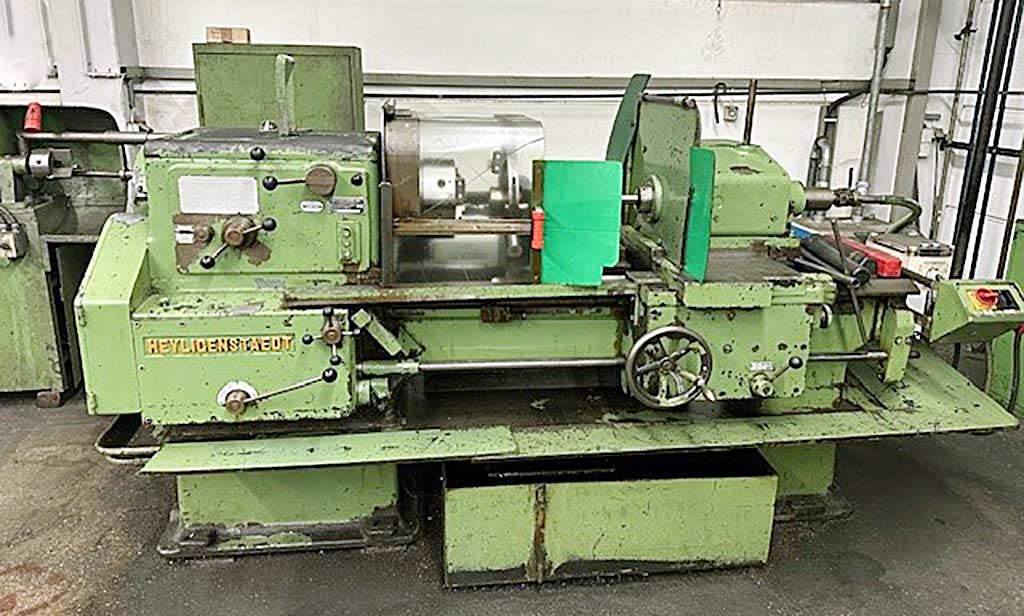
The Heyligenstaedt, also 1951, is the specialist version of the same idea. It is a deep hole drilling machine, running at 1,120 rpm with a turning diameter of 282mm, and its job is to drive a single straight bore along the length of a solid steel bar rather than into its face. That is a much harder problem than it sounds, because a long drill wants to wander, and the whole machine exists to stop it wandering. The parts that need this are hydraulic cylinder bodies, long machine spindles, and rollers, anything that must be hollow down its own centreline and straight enough to hold pressure or spin true.
Turning: the lathe work
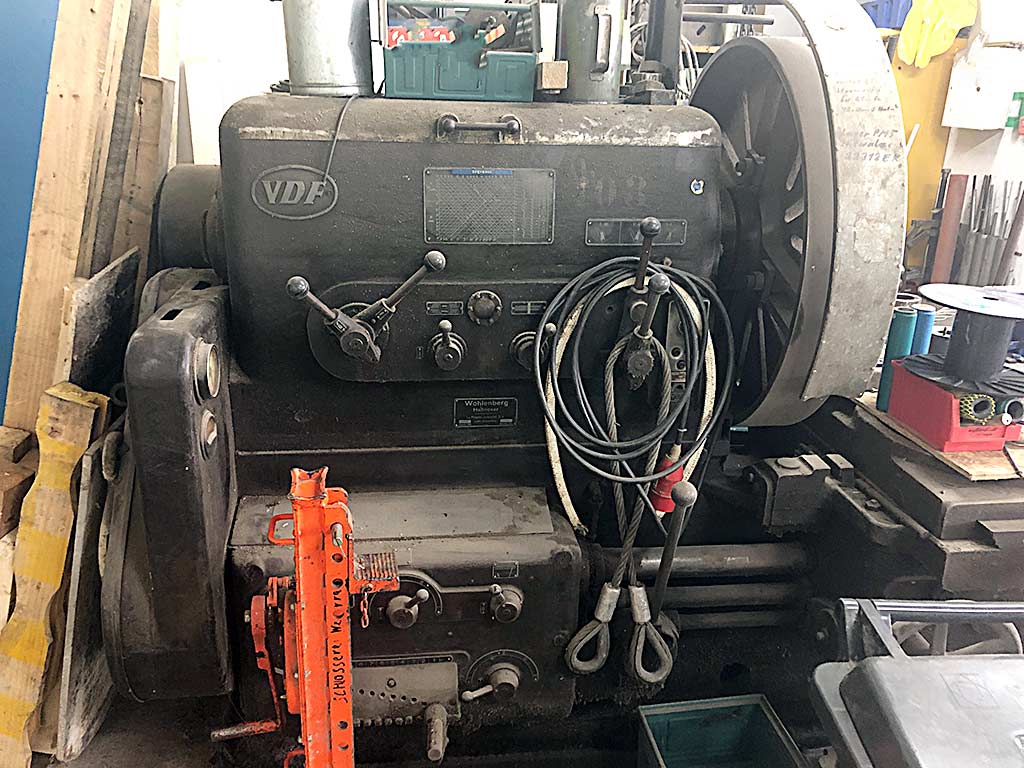
Where a drill holds the part still and spins the tool, a lathe spins the part and holds the tool. The Wohlenberg V8/500 was cast in 1943 in Hannover, and it is built for large work: a 4,000mm centre width, a 900mm faceplate, six metres long overall. Machines at that size turn shafts, rollers and heavy cylindrical components, the parts that heavy engineering and shipbuilding consume constantly. This particular one is listed as dismantled and available for inspection, which is an honest description rather than a sales position.
The WMW DRT 36, built in 1957, answers a different question. WMW was the export brand of East Germany's machine tool industry, and a turret lathe is a production machine: the turret carries several tools already set up, and the operator swings them into position one after another, so a batch of identical parts can be turned without re-tooling between each one. Bushings, fittings, shaft ends, made by the hundred. That is what a planned economy needed from a machine shop, repeatable volume rather than one-off precision. The listing describes it as untested, with extensive accessories included.
The K. Martin DLZ 502 from 1958 is the general-purpose counterpart: a conventional leadscrew and feed rod lathe with a 500mm swing over the bed, 300mm over the support, and a 58mm spindle bore. Manual control, no electronics. The kind of machine a jobbing shop uses for whatever comes through the door.
Grinding: where the tolerance comes from
A lathe or a mill gets a part close to size. Grinding is what makes it exact. Fortuna, of Stuttgart, built three of the machines on this list, which is not a coincidence, because the company's cylindrical grinders were a standard fitting in precision shops.
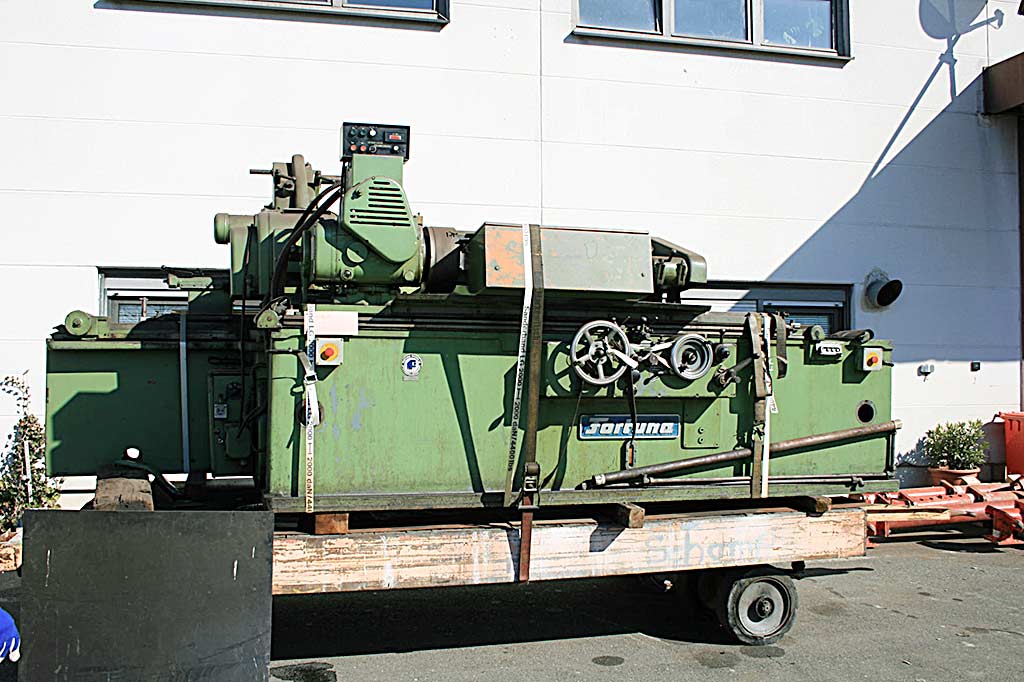
The Fortuna ES 450-1500 from 1955 is an internal grinder, working bores up to 450mm diameter on workpieces up to 300kg over a 1,500mm centre distance. The Fortuna AFB500 AS from the same year grinds external diameters up to 270mm on a 7.5kW drive. The Fortuna ESU 350-1500 from 1958 does external work at a larger 350mm capacity over a 1,500mm grinding length.
What comes off these machines is the surface that has to fit something else precisely: a bearing journal, a spindle, a hydraulic rod, a roll face. The grinding step is the difference between a shaft that spins in a bearing and a shaft that destroys one.
The large end of the shop
The Waldrich Siegen PF-S-150 was built in 1953 and it is a different category of object entirely: a portal milling machine with 14,000mm of table travel, 4,500mm of crossrail saddle travel and 4,000mm of crossrail travel, capable of horizontal and vertical milling and drilling. Machines this size exist because some parts are too big to fit in anything else, such as turbine housings, press frames, large gear cases, and machine beds for other machines. It is listed as CNC, which on a 1953 machine means a control system fitted long afterwards to a structure that never needed replacing.
At the other end of the metal shop, the Schuler St 0,75x780 from 1955 is a sheet metal shear: 780mm working width, 135 strokes a minute, cutting iron at 0.75mm and steel at 0.5mm. Schuler is one of the major names in German forming technology, and this is the simple end of that business, cutting flat sheet to size before anything else happens to it.
Not only metal
The Schwabedissen DAZSa 23, built in 1952, is a double-end profiler for timber. It machines both ends of a workpiece in one pass, at working widths from 400mm to 1,250mm, which is the operation that produces the tenons and profiles letting a component slot into a door, a window frame or a piece of furniture. The reconstruction that kept the drill presses busy needed joinery too.
The Bahmüller KSRR 107/2200 from 1958 works in board rather than timber. It cuts, creases and scores at up to 150 metres a minute across a 2,300mm passage width. Creasing is the step that puts the fold lines into flat board so it can later be folded into a carton, the machine that exists before a cardboard box does.
The Berstorff rolling plant from 1959 handles thermosetting plastics. Two identical rolling mills, 1,200mm working width, 400mm roll diameter, squeezing raw compound between rollers into continuous sheet at a controlled thickness, the base material that becomes gaskets, belting, sheeting and flooring. Its drive wheel was renewed in 2000; the rolling stand it drives is original.
And powering a factory full of this equipment required a machine too. The Siller & Jamar steam boiler from 1956, supplied with a W. Oertli AR-4 burner, raises the steam that historically drove process heat and turbine power across a plant.
What survives, and what to watch for
There is a selection effect running through this list. These are not fifteen machines picked at random from 1950s Germany. They are the ones nobody scrapped, which means each of them either earned its place on a shop floor for seventy years, or sat unused in the corner of a building for thirty of them. Both produce a machine that still exists. Only one produces a machine you want, and the build year does not tell you which.
Here is the part that surprises buyers. On a machine this old, the oldest component is rarely the problem. Cast iron does not fatigue sitting still, and a 1955 bed that was scraped flat is still flat. What fails is whatever was added later. The 1953 portal mill is listed as CNC, which means a control system fitted to it somewhere around the 1980s, and a 1980s control is now considerably harder to source parts for than the 1953 casting it is bolted to. The newest part of the machine is usually the first to become unobtainable.
So inspect the iron and the additions separately.
On the iron: check the bed ways near the headstock, where wear concentrates, because a bed worn unevenly cuts a taper that cannot be adjusted out. Put an indicator on the spindle nose and apply lever pressure, because movement there means chatter and poor surface finish. Both are fixable by a specialist, at a cost that belongs in the purchase price rather than in a surprise three months later.
On everything else: ask what tooling is included, in writing, before you travel. This is the single biggest swing in what an old machine is worth and it is consistently underestimated. A lathe without its change gears may be unable to cut a thread at all, and having a set made can cost more than the machine did. Ask about the wiring, because insulation of this era can contain asbestos. Check whether you have the three-phase supply it expects.
Then get a rigging quote before you agree a price, not after. The 1940 drill is 2,500kg. The portal mill needs specialist lifting, probably foundation work, and levelling on arrival before it will hold accuracy. On machines at this weight, moving one can cost more than buying it.
None of that is a reason to avoid this equipment. It is the reason the equipment is affordable. A buyer with access to a machine rebuilder, and no requirement for guaranteed uptime, is looking at capability that costs a great deal more to buy new. A buyer who needs a machine that runs on the morning it arrives should be looking at something from the 1990s.
What these fifteen have in common is that somebody, at some point across the last eighty years, decided each one was worth keeping rather than cutting up for scrap. That decision has already been made many times over, by people who had to run the machine and pay for it. It is a reasonable starting point for making it once more.
The full inspection guide for pre-1960 machine tools goes through each of these checks in more detail.
Frequently Asked Questions
What is the oldest machine listed on Machine Octopus?
A Lindner LB 14 upright drilling machine built in 1940, making it 86 years old. It weighs around 2,500kg, has a table measuring 800mm by 400mm, and was fitted with a Heidenhain digital readout long after it was built.
Why are machines from the 1940s and 1950s still being sold?
Because the operations have not changed. Drilling holes, turning shafts, grinding a bearing journal to size and shearing sheet are still jobs somebody pays for. The castings from this period also carry more mass than modern equivalents, and the mechanics can be diagnosed and repaired without proprietary tooling or a manufacturer service contract.
What was WMW?
WMW was the export brand of East Germany’s machine tool industry. The WMW DRT 36 on this list is a turret lathe from 1957, built for repeatable batch production rather than one-off precision work.
What is a deep hole drilling machine used for?
It drives a single straight bore along the length of a solid bar rather than into its face. The parts that need it are hydraulic cylinder bodies, long machine spindles and rollers: anything that must be hollow down its own centreline and straight enough to hold pressure or run true.
Is a CNC retrofit on an old machine a good thing?
It can be, but it changes where the risk sits. A control system fitted in the 1980s to a 1953 machine is now considerably harder to source parts for than the original casting, because it is electronic, proprietary and was made in far smaller numbers. On machines of this age, price the iron and the electronics as two separate risks.
Are pre-1960 machine tools worth buying?
It depends on the buyer. If you have maintenance capability in-house or a relationship with a machine rebuilder, and you need capability rather than guaranteed uptime, they are frequently good value. If you need a machine that runs reliably from the morning it arrives with no rebuild budget, something from the 1990s will serve you better.
This article is for general informational purposes only and does not constitute legal, financial, tax, or professional advice. Always confirm compliance, tax, and import requirements with a qualified professional or the relevant authority before making a purchasing decision.
More Articles
View all articles →
17 September 2026
NewPre-1960 machine tools: the full inspection guide
How to read way wear, test a spindle, spot the parts that actually fail, and where you stand legally on a machine built before CE marking existed.
31 August 2026
How to sell used industrial machinery in 2026: pricing it right, and what actually makes a buyer commit
What actually determines how fast a used machine sells, and why holding out for scrap rarely pays off
28 August 2026
Plastics processing machinery is more than the moulding machine
A moulding machine makes nothing on its own — drying, dosing, welding and calibration finish the part.